
The operating problem
Collecting is not simply buying and selling. A useful exchange needs to know which edition a person owns, which items are duplicates, what is missing, and whether another person's collection creates a reciprocal match.
What we built
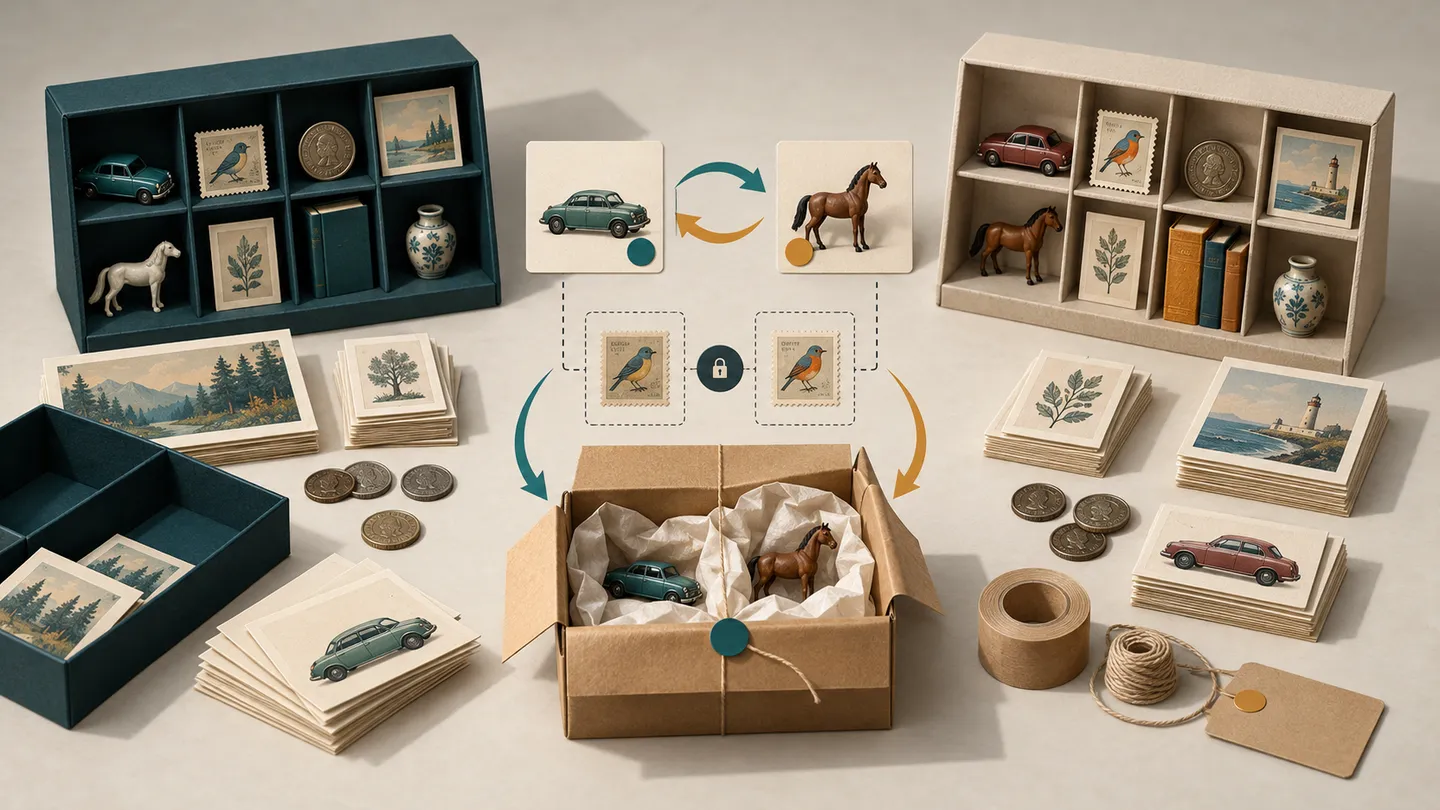
We developed a platform for managing collections and finding relevant exchanges. Matching works with specific collection records, while messaging and shared circles help people coordinate.
The product also models what happens after a match: commitments, reservations, shipping, receipt, cancellations, and externally arranged exchanges. Those states keep inventory and exchange history understandable as real-world plans change.
What the work enables
The implemented web product connects discovery with an exchange lifecycle instead of stopping at a list of matches. This is our own product work, not an anonymized client engagement or a claim about user growth.
Marketplace value often depends on modeling the agreement and fulfillment steps that follow discovery.
A match is only the beginning
A reciprocal match identifies a possible exchange, not a completed one. Participants may reserve items, change plans, arrange delivery outside the platform, or cancel before anything moves.
The lifecycle gives those events a place in the product model. A duplicate available for discovery is different from an item already committed to another person. Keeping that distinction visible helps explain why collection state and exchange history need to work together. It also shows the broader software challenge: real-world agreements rarely follow a single uninterrupted happy path.