
The operating problem
An established web product already has users, data models, and operational rules. A mobile application needs to reuse those foundations without merely reproducing desktop screens on a smaller display.
What we built
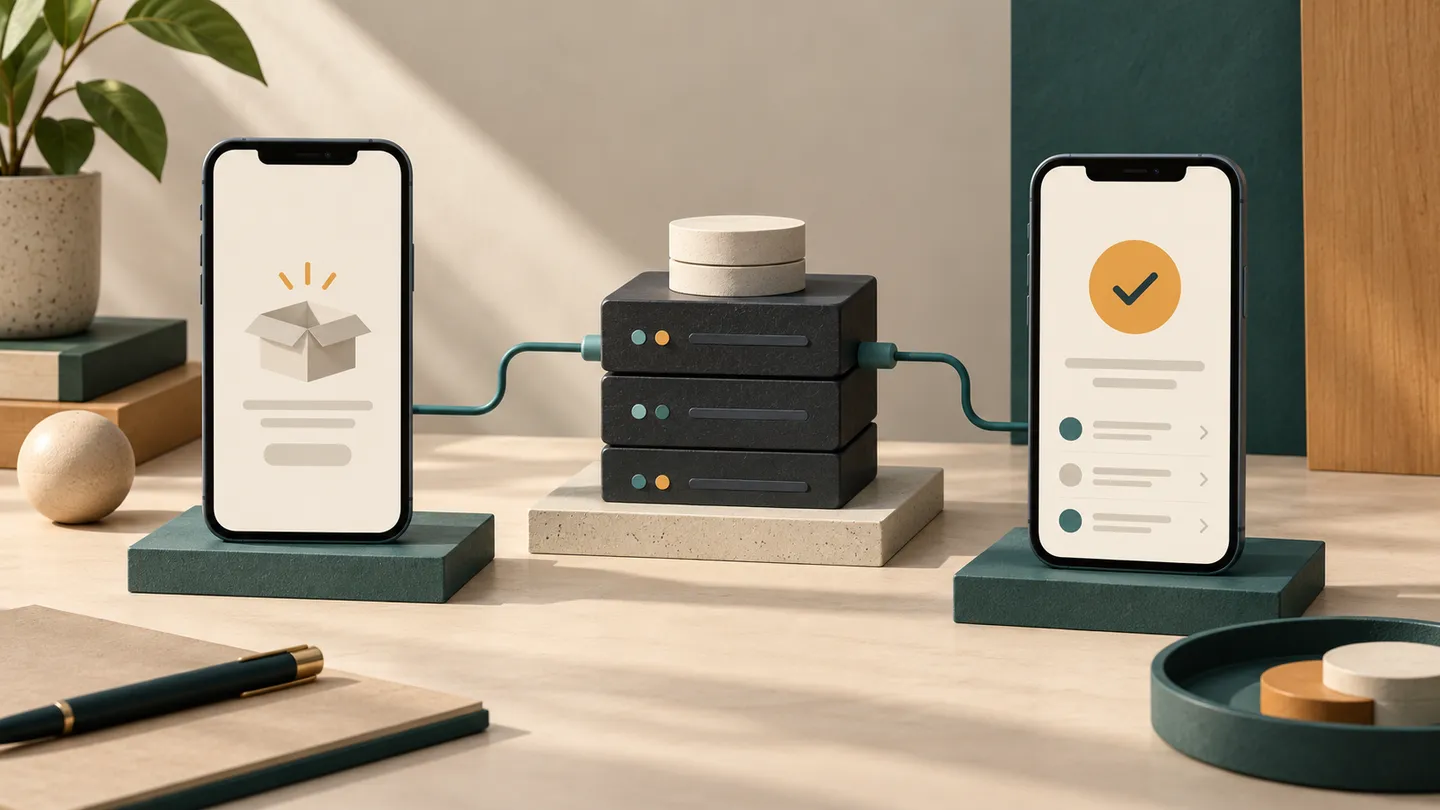
We built an Expo and React Native companion in TypeScript that consumes the existing PHP API. The work covers collection and exchange interactions within mobile-specific screens and navigation.
Development includes build preparation and device-oriented QA, with attention to loading, empty states, errors, and recovery. Backend integration remains shared so the mobile product does not create a second independent source of business truth.
What the work enables
The repository documents a substantial development-stage mobile application and distribution preparation. It is not presented as a publicly released App Store product.
Reusing a backend is a strong starting point; a usable mobile experience still needs deliberate interaction design.
Shared rules, different interactions
A phone user may reach the same collection or exchange record through a different sequence than a desktop user. Navigation and feedback therefore need to be designed for the device rather than copied from the web layout.
Loading, empty, and error states are part of that experience. They tell the user whether there is no matching content, a request still in progress, or a problem that needs another attempt. Keeping business data in the existing backend lets mobile interaction design evolve without inventing a competing set of operational rules.