

The inventory platform already knew what each order should contain. The missing piece was a workflow that could compare that digital intent with the physical carton while the operator still had time to correct it.
The operating problem
Over- and under-picks were being discovered too late. Operators had to reconcile the sales order, the products in front of them, and shipment status across separate steps.
What we built
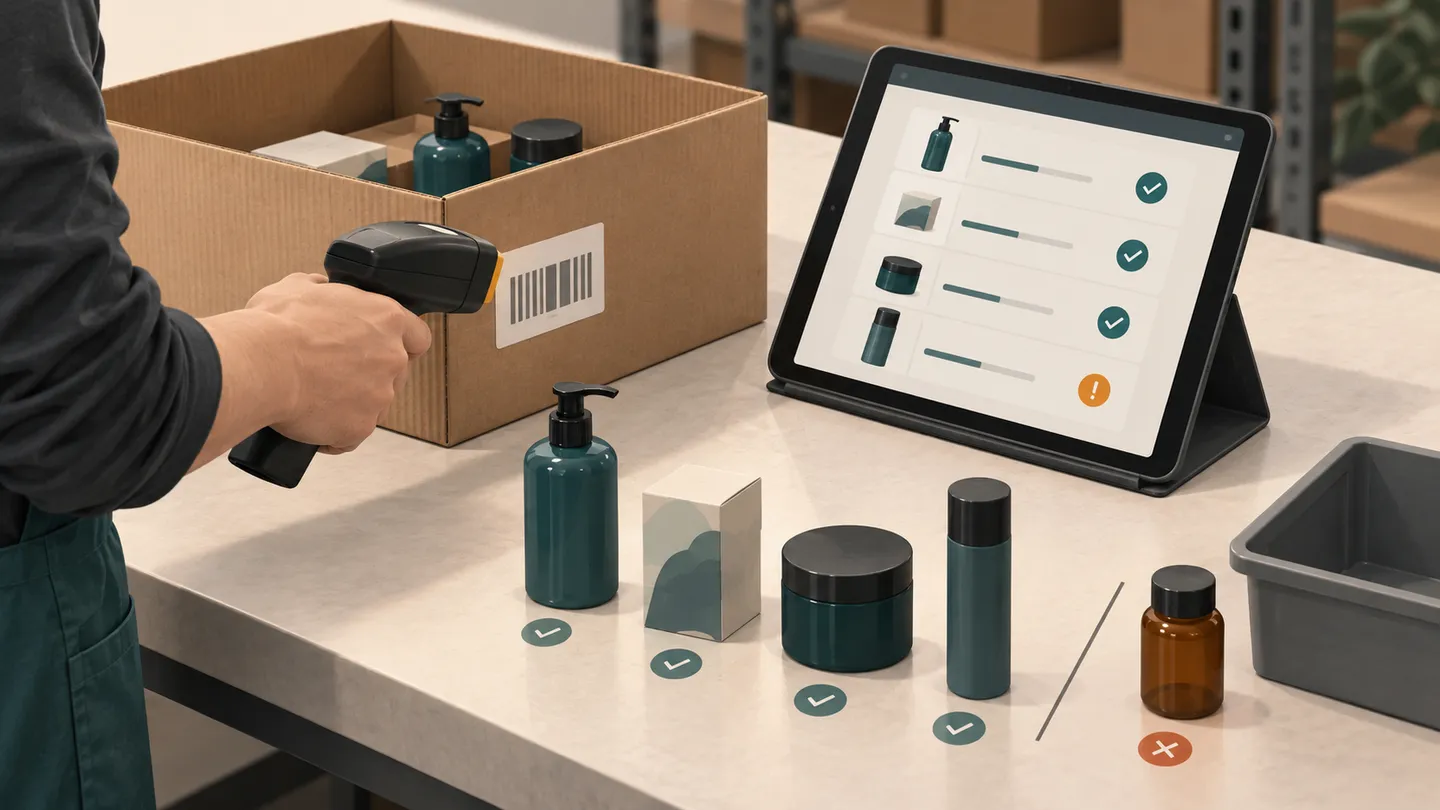
We built a tablet-based web application that established an active order and carton, accepted scans from a wireless barcode reader, and validated each item and quantity in real time. Normal scans moved the work forward quietly; unexpected, duplicate, or excess scans created an unmistakable exception.
The application retrieved packing information through the Zoho Inventory API. Once the carton matched the order and the operator explicitly completed the workflow, shipment status was returned to Zoho Inventory without requiring a second interface.
Every scan answered two questions immediately: whether the item belonged in the active carton and what the operator should do next.
The result
The control point moved from after-the-fact reconciliation to the warehouse floor. Operators worked from one guided sequence, discrepancies became visible before dispatch, and supervisors had a shared record for investigating exceptions.
The moment an exception becomes useful
A barcode check is most valuable before the carton is closed. At that point, an unexpected item can still be removed, a missing quantity can still be picked, and the operator can compare the physical contents with the active task. A warning discovered only after shipment has a very different operational cost.
Order and carton context also give the scan meaning. The same product may belong to another order, but that does not make it correct for the carton currently being packed. The interface therefore turns a stream of identifiers into decisions about this specific task. Explicit completion provides the boundary between work in progress and the shipment status returned to the inventory platform.
Reusable pattern: keep the ERP or inventory platform authoritative, but design the execution interface around the physical sequence of the work.